

Background
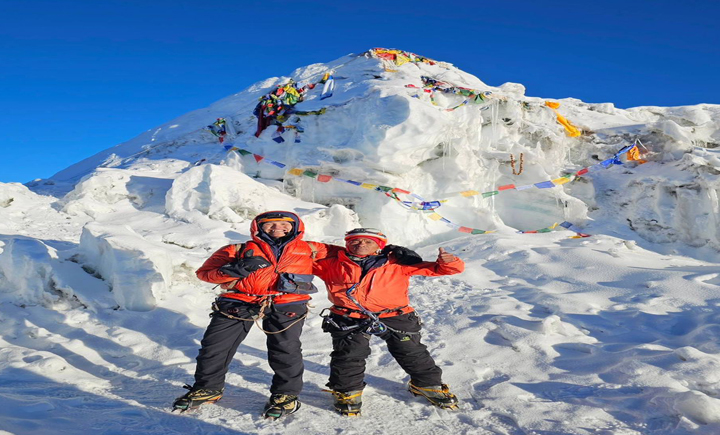
Whenever you think of sky-piercing mountains, Mt Everest (8848m) is the epitome of such imagination. This region harbors some of the most grandiose mountain ranges, which is definitely a utopia for travel fanatics. One of those mountains residing in the Everest region is the amazing Island Peak (6189m). This peak stands out amongst its peers for being located slightly east from the rest of the magnificent bunch. Although being relatively easy to climb, the peak climb does not lack in thrill and adventure.
The Island Peak climbing trip takes place in the renowned Everest region which spans through the districts of Solukhumbu. The advent leads us inside the Sagarmatha National Park, and we can see exotic animals as well. Exploring the quaint Buddhist settlements of Tengboche, Dingboche, and Lobuche, the glorious adventure takes the travelers deep into the heart of the Everest region itself. By visiting the ancient monasteries here, we can learn about the prevailing lifestyles of the people of Sherpa and Tamang communities. The lowest elevation of the trek in Kathmandu, which stands at 1300 meters. The highest altitude is undoubtedly the Island Peak, which stands at an elevation of 6189 meters. The terrain in this trek is covered with ice and rocks and involves heavy walking. On average, about 6 hours of walking is needed on a daily basis. On the summit day, this may even extend as long as 9 hours. The Everest region is pretty cold so wear adequate clothing. Altitude Sickness can also cause major concern to the travelers; it should be kept in mind to have safe and memorable travel experience.
Everest Base Camp Trek, Gokyo Lake Trek, and Everest Three Passes Trek are the famous treks around the region whereas, Lobuche (6189m) also serves as a great peak climbing destination.
Important documents and items:
Valid passport, 2 extra passport size photos, airline tickets
Separate photocopies of passport, visa form (easily obtained at Kathmandu airport), proof of insurance
Dollars in cash for purchasing Nepalese visa at Kathmandu airport
Credit cards, bank/ATM/cash machine cards for withdrawing funds from cash machines (bring a photocopy of your cards)
Personal Climbing Gears:
Ice axe
Crampons
Harness
Tape slings (2)
Screwgate karabiners (2 lock, 2 unlock)
Descender/eight figure
Plastic mountaineering boots
Ascender/Jhumar
Helmet
Group Climbing Gears:
Snow bar*
Rope*
Ice hammer*
Ice screw*
Head
Head scarf, also useful for dusty conditions
Warm hat that covers your ears (wool or synthetic)
Headlamp with extra batteries and bulbs
Sunglasses with UV protection
Prescription sunglasses (if required)
Upper Body:
Polypropylene shirts (1 half sleeve and 2 long sleeves)
Light and expedition weight thermal tops
Fleece wind-stopper jacket or pullover
Waterproof (preferably breathable fabric) shell jacket
Down vest and/or jacket *
Gore-Tex jacket with hood, waterproof and breathable
Hands
1 pair of lightweight poly-liner gloves
1 pair of lightweight wool or fleece gloves
1 pair of mittens; consists of 1 Gore-Tex over mitt matched, waterproof, polar-fleece mitt liner
Lower Body:
Non-cotton underwear briefs
1 pair of hiking shorts
1 pair of hiking trousers
1 pair of lightweight thermal bottoms
1 pair of fleece or woolen trousers
1 pair of waterproof shell pants, breathable fabric
Feet
2 pairs of thin, lightweight inner socks
2 pairs of heavy poly or wool socks
1 pair of hiking boots with spare laces (sturdy soles, water resistant, ankle support, “broken in”)
1 pair of trainers or running shoes and/or sandals
Cotton socks
Gaiters
Sleeping
1 sleeping bag -30 degree centigrade
Fleece sleeping bag liner
Rucksack and Travel Bags:
1 medium rucksack or 1 large duffel bag *
Daypack/backpack of 35 to 50 liters for carrying your valuables, should have good shoulder padding
Small padlocks for duffel-kit bags
2 large waterproof rucksack covers (optional)
Medical
Small, personal first-aid kit (simple and light)
Aspirin, first-aid tape, and plasters (Band-Aids)
1 skin-blister repair kit
Anti-diarrhea pills
Anti-headache pills
Cough and/or cold medicine
Anti-altitude sickness pills: Diamox or Acetylzolamide
Stomach antibiotic: Ciprofloxacin, etc. Note: Do not bring sleeping pills as they are a respiratory depressant!
Water purification tablets or water filter
1 set of earplugs
Extra pair of prescription glasses, contact lens supplies
Practical Items
1 small roll of repair tape, 1 sewing-repair kit
1 cigarette lighter, 1 small box of matches
1 compass or GPS(optional)
1 alarm clock/watch
1 digital camera with extra cards and batteries
Large Ziplocs
2 water bottles (1 liter each)
1 small folding knife
Binoculars (optional)
4 large, waterproof, disposable rubbish sacks
Toiletries:
1 medium-sized quick drying towel
Toothbrush/paste (preferably biodegradable)
Multi-purpose soap (preferably biodegradable)
Deodorants
Nail clippers
Face and body moisturizer
Female hygiene products
Small mirror
Personal Hygiene
Wet wipes (baby wipes)
Tissue /toilet roll
Anti-bacterial hand wash
Extras/Luxuries
Reading book
Trail map/guide book
Journal and pen
iPod
Travel game i.e. chess, backgammon, scrabble, playing cards (to help you pass the time at teahouses and/or camps)
1 modest swim suit
Binoculars (optional)
Voltage converter (from 220 to 110 ampere)
Plug adapter (2 round pegs to 2 flat pegs)
Lightweight pillow case (in case your teahouses provide you with pillows) or use your own stuff as a pillow


